How to Trim a Goatee with Beard Trimmer – Best Guide for Beginners
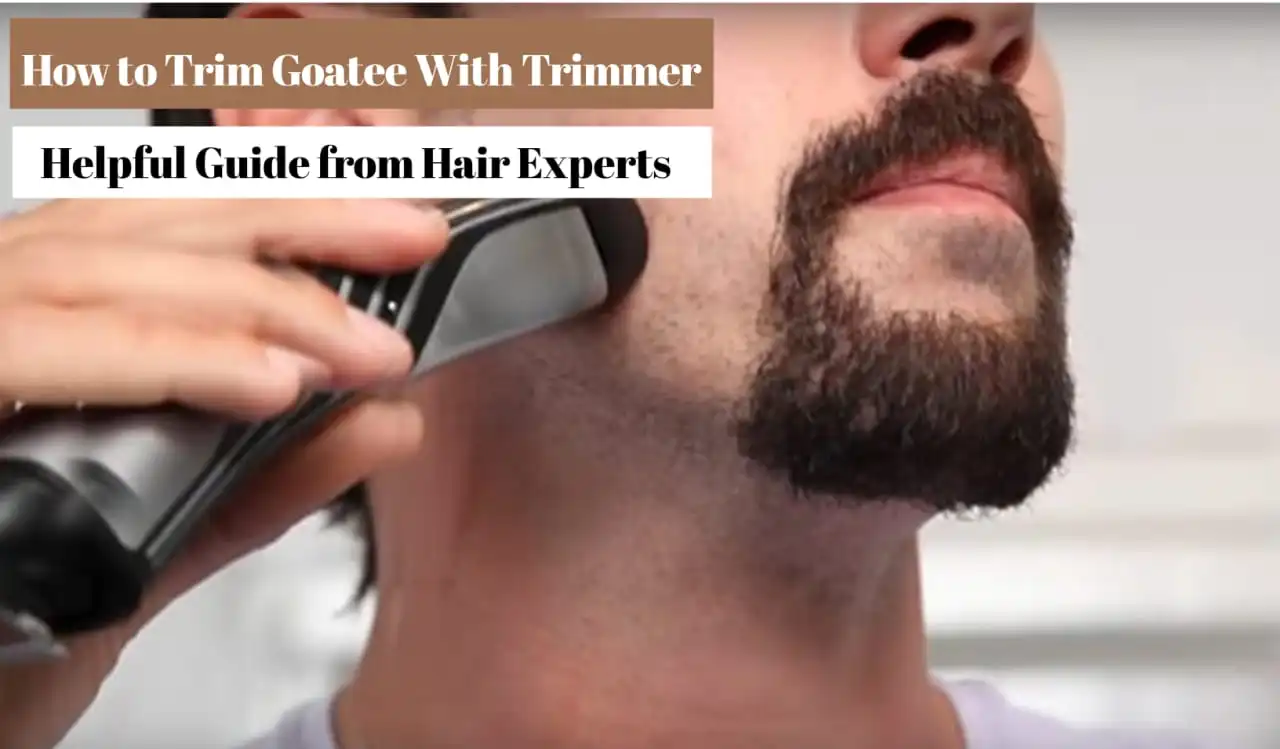
How to trim a goatee with a beard trimmer using expert tips, grooming techniques, and my personal experience for a sharp, symmetrical, and stylish look.
The first time I attempted to grow a goatee, I soon realized that it was far more difficult to keep than I thought. It was not about letting the beard grow but about trimming it up and clipping it around the corners. Most guys have trouble with the uneven lines, patchy growth, or a disheveled finish that destroys the overall look. I had the same problem, and I understand how frustrating it is when you do not have the goatee that you planned.
Fortunately, with an excellent beard trimmer and the appropriate method, the situation can be entirely transformed. In this article, I will take you step by step on how to trim a goatee, using my experience and tips I have used to groom the goatee. The goatee is an eternal fashion, and whether you just want a simple circle beard, a vintage chin goat, or something more contemporary, it is all about precision. Even the thickest beard may be dishevelled without straight edges and balance.
This is why it is so imperative to trim using the appropriate guard settings, prepare it, and detail it. These lessons I have acquired by trial and error, and I do not wish to expose you to the same amount of trouble that I experienced. And in case you desire a goat that appears to be clean, stylish, and professional, then stay with me till the end. You will leave with the very routine that I have to use to have the perfect goatee all the time.
Choosing the Right Beard Trimmer for Goatee
In the case of trimming a goatee, the tool you use is everything. My advice will be to purchase a beard trimmer that has a variety of guard lengths and stainless-steel hair blades, since accuracy is important during shaping. Cordless trimmers that have an adjustable setting can enable you to alternate between clearing the bulk and defining the edges very fast. When you have a trimmer with a precision head or T-blade, it is even easier to draw sharp lines.
The trimmers may be cheap or of low quality, hence pulling the hair or leaving a ragged edge, thus purchasing a good brand would be worth it. The quality trimmer not only helps save time, but it also makes you feel confident about your grooming process. Personally, I use a trimmer that has a lithium-ion battery since the battery will provide constant power during the session. The poor motor may destroy your goatee by slowing down during the process of trimming, and that will mostly cause errors.
The grip and the ergonomics of the trimmer are another criterion I take because goatee trimming is a process that requires a controlled movement. Waterproof models are also excellent when you would like to trim in the shower or clean the blades with ease. There is always a trimmer that will provide you with comfort and accuracy, and that is the best trimmer. The goatee makes it such an easy and pleasant thing to do as soon as you have the right tool in the right hand.
Prepping Your Beard Before Trimming
Proper preparation before you even switch on the trimmer makes a huge difference in the end product. I also begin by washing my face and beard using a mild beard shampoo to clean off the dirt, oil, and accumulation. Neat hair is less difficult to trim in a straight line, and it also prevents the blade from becoming clogged. I dry my beard with a towel after washing because wet hair can result in inaccurate cuts of hair being trimmed.
Brushing the beard the way it grows assists in separating the hair and allows one to have a clear picture of where the goatee lines will be. The small steps seem to be simple, but they form the basis of a perfect trim. The other necessary preparatory step that you should consider is the style of goatee you want to trim. It may be a Van Dyke, or a circle beard, or an old-fashioned goatee, but having a mental image spares you the excess of trimming.
I also make use of a good lighted mirror in order to see the edges. In case your beard does not grow evenly, it is better to leave it to grow for a few more days before cutting, so that the length will even out. In some cases, I apply some beard oil before the hair is trimmed, so that the hair is not as stiff. Prep will minimize errors and make your goatee appear purposeful and clean.
Defining the Shape of Your Goatee
Your goatee is what makes you different, and it is imperative to define it properly to appear elegant. I tend to begin with the trimmer on no guard, drawing a line over the goatee area, and then I observe the natural line of my chin. Following the lines with utmost care around the jawline and mustache forms the shape of the goatee. I would never hurry at this point, as I will either have uneven sides or a lopsided shape.
To start with, it is preferable to cut less in the beginning, as you can always perfect afterward. The outline should be properly defined so that the remaining part of the trimming process becomes comfortable. The other trick that I employ is to trim slightly beyond the goatee area to give contrast to the clean-shaven areas. This helps to accentuate the goatee, particularly in the cheeks and neck.
I tend to take a trimmer or detailer that is precise in terms of the corners of the mustache and chin, as these parts require additional attention. The most difficult part is to keep both sides symmetric, and therefore, I always look in the mirror when trimming. In case one side is a little lopsided, minor adjustments can be made before it is too late. When the shape has been defined, the goatee is already 80 per cent finished.
Goatee Trimming Technique
In the case of trimming the goatee itself, I would start with a bit longer guard and cut down. This will not allow me to cut off excessively large amounts of hair too fast, and will also allow me space to work with. I shave gradually along the chin and mustache, in the direction of nature. Even length is also maintained with short straight strokes. Once I have removed the bulk, I change my guard to a shorter one or none at all when detailing the edges. This two-step procedure guarantees completeness and sharpness.
I also sensitively shave the mustache part so that it forms a natural part with the goatee. To prevent accidental over-trimming, it is better to use a smaller attachment on the corners of the mouth. After the main area is cut, I pass through it again to give the outline a sharp edge and remove any hairs that have wandered away. I also like to use the trimmer on the neckline in such a way that it is trimmed vertically. Symmetry is what I consider my primary focus in all steps, and hence, I would always compare the two sides.
Using Guards for Symmetry and Precision
Guards will be a necessary item to maintain a stable and trim goatee. I tend to use a higher guard, like 4mm or mm5m, to keep the chin thick. In the case of the mustache, I would use a bit shorter guard to ensure it does not dominate the rest of the goatee. Guards enable me to trim with ease, and I do not have to worry about cutting too close.
They also help to keep the same length on both sides of the goatee. In the absence of guards, one can easily go too far and lose shape. The other benefit of guards is that it is consistent later on when trimming. When you have the right length of guard that fits your goatee, keeping it would be as easy as that.
Detailing the Neckline and Cheek Line
Neckline and cheek line are significant in ensuring that your goatee is sharp and well-defined. My neckline is normally cut one inch above the Adam’s apple in order to make a natural curve. Excessively shaving renders the beard clumsy, whereas under-shaving renders it shabby. In the case of the cheek line, I will follow the natural growth and cut out any hairs that are not within the goatee.
This is the contrast between the goatee and the clean skin, which makes the style more defined. The neckline and cheek lines are sharp and add to the entire look. In the process of detailing, I change to a precision trimmer or even a razor to make it even sharper. I take my time and follow the lines to ensure that they are sharp and they are symmetrical.
The right lighting is able to assist in identifying hairs that are easy to miss. I, too take time to make a break to look at the general form in the mirror. Even minor changes can result in a lot of balance and style. The goatee appears well-groomed and purposeful instead of dishevelled by addressing the neckline and cheek line.
Maintaining and Styling Your Goatee
After the goatee is cut, it is maintained in order to maintain its appearance. I tend to cut every 3-4 days so that the shape does not fade away and so that the unwanted hairs are kept at bay. Beard oil or balm will make the hair soft and less itchy. A beard shampoo should be washed regularly to avoid accumulation and keep the goatee clean.
Tangling may also be prevented by combing the hair on a daily basis. These little practices keep a clean, professional appearance between the trims. It is equally important to trim the goatee as well as style it. I also apply a light beard balm to slick and hold when I go out on a special occasion.
Common Mistakes to Avoid While Trimming
Among the greatest errors I made at the beginning was cutting too much and at the same time. Hair can not be replaced after it is gone, so it is better to make it longer and cut it shorter in steps. The other error is that the symmetry has been overlooked, and this has made the goatee appear imbalanced. Hair is trimmed too quickly in the dark, or without a good mirror, and it is likely to be missed. A dull trimmer blade may also drag the hair and give it uneven cuts. These pitfalls will destroy an otherwise fantastic goatee.
I have also felt that it is difficult to trim with missing preparation steps, such as washing or combing. Most guys also fail to sketch the shape before trimming, thus over-trimming. The other error is failing to keep the neckline and cheekline trim, which leaves the goatee dishevelled. Others even forget to clean and oil their trim, and this reduces their life and performance. These pitfalls will be avoided, and the process of trimming a goatee will be much easier and less painful. The process involves learning through mistakes, which is a waste of time and frustration.
My Personal Experience
I made all the possible mistakes when I was starting to trim my goatee. I applied cheap trimmers that pulled hair, hurried the process, and, as a result, most of the time, I would shave it all off in frustration. As time progressed, I came to understand that patience, good equipment, and a well-defined routine were the key to everything. After spending money on a good trimmer and taking the right measures, my goatee eventually began to appear as I wanted.
Even friends and family members noticed the difference, and this gave me confidence. Nowadays, shaving my goatee does not seem to be a burden but rather a nice ritual. It has been aught that a goatee is a style that is very picky, but once you have a perfect goatee, then you get a well-groomed,asculine appearance. Having a routine of trimming my hair also means that I do not have to contend with a large or dishevelled beard.
After trying various shapes, I am well aware of which shapes best fit my face. The practice of sharing my routine with other people has also enabled me to perfect my routine as time goes by. The goatee can be mastered by anyone, and my experience demonstrates that proper technique can help to achieve the desired outcome. The grooming process is a process, and with every trim, there is an improvement.
FAQs About How to Trim a Goatee with Trimmer
Final Thoughts
Shedding a goatee using a beard trimmer takes time, precision, and the appropriate method. Beard preparation, shaping, and defining it is another step that leads to the overall outcome. The neckline, detailing, and use of guards are the key to a sharp and professional appearance. The practice of avoiding mistakes and routines will give the same output. The personal experience shows that it is not a secret that anyone can learn to master the goatee with practice. Adhere to this, so your goatee will always look trim, symmetric, and stylish.